
Wall Coatings
QES Brings You The Future Of House Painting With PROPERLA

The days of traditional masonry wall paints are finished. Gone are the days of flaking and peeling paint; it’s a common problem many of us face that’s not only an expensive hassle to continually repaint, but can cause lasting damage to your house. It’s time to stop painting your home, and move on to the latest paint technology on the market – PROPERLA.
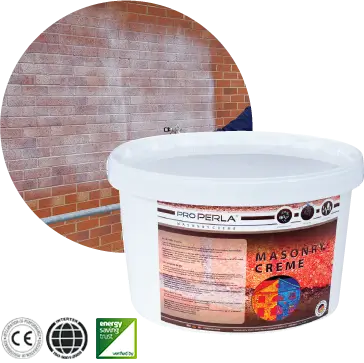
PROPERLA MASONRY CREME – House Painting Has Evolved
Preparation Step 1
Remove all unwanted dirt and loose paint from the surface by wire brushing or power washing. All walls are then treated with Anti Fungicade.
Preparation Step 2
All other areas such as doors and windows are protected to avoid wall coating over-spray.
Repair Step 1
Repair Step 2
Application of primer and sealant with an in-built curing agent. This coating stabilises the substrate and enhances the finished product.
Application Step 1
The final top coat application is applied in either a coarse or fine texture. This coat will chemically bond with the base layer.
Final Product
What is Properla Masonry Creme?
Key Features:
- One-coat protection
- Choice of colours available
- Penetrates up to 17mm into the substrate to provide an invisible insulation barrier
- Cures Dampness
- Chemically bonds to mineral surfaces
- Dries clear, it does not alter the appearance of the substrate
- Super hydrophobic
- Creates a self-cleaning surface
- Highly breathable
- Manufactured in Germany using the very latest, superior technology
- It has undergone UKAS Accredited testing
- Helps prevent salt efflorescence and sulphate attack
- Helps prevent discoloration
- Discourages growth of moss, algae and lichens
- Prevents frost damage
- Proven performance
Prevent & Protect
This is known as the ‘lotus effect’ due to its similarity to the lotus leaf but is also seen on duck feathers and butterfly wings.
Roofs coated with RENOTEC will respond in the same way – water will form droplets and won’t penetrate the tiles. Independent testing has shown that it reduces water absorption by 96.3% and meets the British standard for water vapour resistance BS EN ISO 7783:2011.
Proven Performance
By diminishing water absorption, ProPERLA Masonry Crème has been proven to reduce soluble salts migrating from bricks and mortar thereby preventing unsightly deposits of salt efflorescence. Whilst salt efflorescence is generally considered an aesthetic problem , it does have the potential to cause structural damage, such as the erosion of mortar joints, known as sulphate attack.
ProPERLA Masonry Crème does not alter the appearance of the building, it helps to maintain and protect the natural beauty of the masonry;
- It mimics the lotus leaf by creating a super hydrophobic, self cleaning surface. Dirt particles are unable to obtain a hold on ProPERLA treated surfaces and will simply flow off with rainfall.
- The growth of moss, algae and lichens is deterred.
- Slows the ageing or breakdown of the surface of the building by helping to protect it from the damaging effects of the weather including wind driven rain, frost, high air humidity and sea salt penetrated air.
- Performance is unaffected by UV rays
Fully Breathable
ProPERLA Masonry Crème has undergone independent tests by UKAS certified body Lucideon and has been proven to meet the following standards;
- ETAG 034:2012 – 25 year hygrothermal performance
- ETAG 004;2011 – external thermal insulation composite
- BS EN ISO 7783 – 2011 – water vapour diffusion
- BS EN ISO 12572 – water vapour resistance
Super Hydrophobic
This is known as the ‘lotus effect’ due to its similarity to the lotus leaf but is also seen on duck feathers and butterfly wings.
Substrates coated with ProPERLA Masonry Crème will respond in the same way – water will form droplets and won’t penetrate the substrate. Independent testing has shown that it reduces water absorption by 96.3% and meets the British standard for water vapour resistance BS EN ISO 7783:2011.
Invisible Insulation
Thermal Efficiency
Independent testing has shown that ProPERLA Masonry Crème reduces water absorption by 96.3% and meets the British standard for water vapour resistance BS EN ISO 7783:2011.