
Facade Coating
Self-cleaning, waterproof & breathable ProPERLA Exterior Wall Facade Coating
ProPERLA Facade Coating is now BBA Certified – Click here to read more.
Invisible Insulation
Super Hydrophobic
Self-Cleaning
Breathable
Proven Performance
ProPERLA Facade Coating has undergone independent tests by UKAS certified body Lucideon and has been proven to meet the following standards;
- EAD 090062-00-0404 – 25 year hygrothermal performance
- EAD 040083-00-0404 – external thermal insulation composite
- BS EN ISO 7783 – 2011 – water vapour diffusion
- BS EN ISO 12572 – water vapour resistance
Fully Breathable
Water vapour permeability testing was conducted in accordance with BS EN ISO 7783:2011 and it demonstrated that ProPERLA Facade Coating is a highly breathable and had little effect on the water vapour diffusion of the substrate.
Unlike some stone and brick sealing products, ProPERLA Exterior Facade Coating does not block the pores of the masonry by coating them with a thin film. Instead the product protects the walls and cavities by keeping them dry whilst allowing air and moisture to escape.
Prevent & Protect
ProPERLA Exterior Facade Coating not only improves the appearance of the building, it helps to maintain and protect it long term.
- Dirt particles are unable to obtain a hold on ProPERLA treated surfaces and will simply flow off with rainfall creating a self-cleaning surface.
- Deterred growth of moss, algae and lichens due to the dry surface created by the wall coating
- Prevent discolouration
- Slows the ageing or breakdown of the surface of the building by helping to protect it from the damaging effects of the weather including wind driven rain, frost, high air humidity and sea salt penetrated air
- Performance is unaffected by UV rays
- The coloured coating ensures a long-term, attractive finish
CASE STUDY
Dining Room Reclaimed by QES
This case study was taken from ProPERLA UK Ltd, please find their other case studies here: https://www.properla.co.uk/case-studies/
“Here are some great property transformations completed by Approved Installer QES using ProPERLA products.
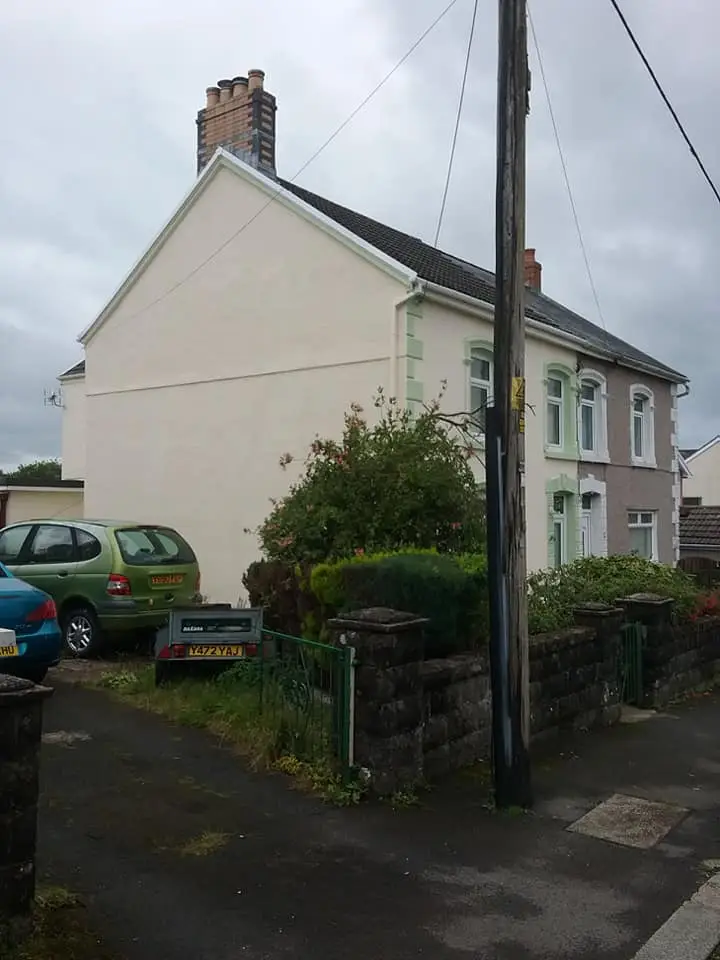
When QES were asked by Mr & Mrs Birkett if they could help give them back their dining room, QES were more than happy to help.
As well as having an exterior that was suffering from discolouration, the homeowners dining room was extremely cold due to water ingress on the exterior wall of the property. This was leading to significant heat loss & damp issues due to the constant exposure to the elements.
Kris and the team at QES applied ProPERLA Facade Coating in order to prevent this water ingress. The super hydrophobic technology in ProPERLA was specially designed to protect properties from this water ingress by creating a water repellent surface on exterior walls. By keeping exterior walls dry, ProPERLA has been shown to keep treated surfaces 6°C warmer on average when compared to untreated surfaces.
After ProPERLA Facade Coating was applied, the results were exactly as hoped. The heat loss caused by the wet walls was dramatically reduced, helping to maintain a warmer temperature in the dining room.
“ProPERLA has made a huge difference. After 20 years of not using our dining room due to it being cold, we are dining in there.” – Mrs Birkett
As well as an improvement to the heat retention of the property, it was also provided with a beautiful new exterior coating.
A big congratulations to the team at QES for such fantastic feedback”

STAY DRY & WARM
UKAS accredited tests demonstrated that by reducing water absorption of the walls, the wall coating lead to thermal performance benefits & has been proven to meet EAD 040083-00-0404.
The product was tested in a hygrothermal chamber which revealed that a wall treated with the wall coating and subjected to repeated heat-rain conditions in accordance with EAD 090062-00-0404, resulted in reduced heat loss when compared with an uncoated wall. The uncoated wall showed on average an increase of 6⁰C of heat loss in comparison to the walls coated with ProPERLA.
ProPERLA Exterior Facade Coating also improves thermal efficiency and contributes to lower energy consumption and lower energy bills, by keeping walls dry. Damp walls allow heat to transfer from the inside out twice as quickly as it would if the walls remained dry.